Thursday, January 5, 2012

International Ghost Story Contest 2012

 The Dr. Euguene Clark Library in Lockhart, Texas has announced its fourth annual ghost story contest, Scare the Dickens Out of Us!

Word count: 5,000 or less
Who?: Anyone (adult and junior divisions)
Entry fee: Adult division $20; Junior division $5
The money is used to benefit the library.

First prize: $1000.00 and a trophy

Second prize: $500.00 and a ribbon 

Third prize: $250.00 and a ribbon
Junior contest prize $250.00 and a trophy

Entries will be accepted only between July 1, 2012 and October 1, 2012 (postmark dates).


For more information, formatting guidelines, and a list of previous winners, visit the library's website (www.clarklibraryfriends.com).


To qualify, stories should be of the ghost-story genre.  

Thursday, December 22, 2011

Read This Book: Space, in Chains by Laura Kasischke

Her husband brought this book home from the magical place where most all the books in their house have come from--the best ones that move from bookcase to bookcase, the ones carried most and that, most often, while she and he sleep, seemingly try to slip out the door--again and again and so they must be pinned down with little notes in the margins, dark lines under their feet.

Space, in Chains is a collection of 72 poems by Laura Kasishke, whom she hadn't read or heard of until now and now she thinks is one of the most brilliant writers moving among us.

From the publisher: Space, in Chains speaks in ghostly voices, fractured narratives, songs, prayers, and dark riddles as it moves through contemporary tragedies of grief and the complex succession of generations. [. . .] Kasischke has pared the construction of her verse to its bones, leaving haunting language and a visceral strangeness of imagery.

This is one of those breathless reviews, the kind where she doesn't want to, or cannot yet, explain why this book is good, why we must read it, why the writer shows her skill--her genius here, here, and here, too.

Wednesday, December 21, 2011

Ho! Ho! Oh! The Floating Order Available on the Kindle

Click to Preview 
on Amazon.com
Two Ravens Press has recently released a Kindle Edition of her short-story collection The Floating Order.

Retailing at $7.99, the Kindle Edition is half the price of the print version.  A short preview of is available as well.


Monday, December 19, 2011

Man Types a Painting

A man has typed a painting.  To do this, he had to rebuilt a typewriter.  It's a lovely idea, she thinks, especially because the image below is pretty representative of how she imagines her writing process as she's inside it: the page as she writes, just before the ink dries from clouds into letters.

It's a lovely idea.  

Read the interview with the man over at GizMag.com and view his non-typed paintings at his website.

Sunday, December 11, 2011

From the Child's Shelf: Holiday Books for 2011


Tonight, she went to the bookstore with a mission to find a good holiday book for children... published this year.  As it went, she didn't find that book.  She did find an excellent, non-holiday book that was published last year entitled A Sick Day for Amos McGee, but she's saving that to review for another day.

The holiday books at this particular shopping-mall-bound bookstore were rather disappointing.  All of the Night Before Christmases were either cartoony and bubbly or artful but all were dull in their choices: as in, she felt like she'd already looked through these books even though she hadn't.  A mouse, stockings from a mantle, a man running to the window.  Got it.  Books that would require a lot of rationalization or cash to burn before buying.

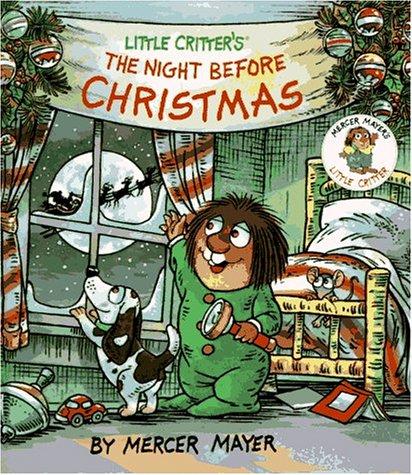
There were books there she recognized.  She didn't bother picking up the Mercer Mayer book because she loved Little Critter  books as a child.  And she skimmed through The Night Before Christmas, illustrated by James Marshall, and it was also great (a chicken sleeping with the children, and all the usual and excellent detail that makes the illustrations integral to the story but also their own separate stories). But all of James Marshall's books are witty, creative, and interesting, and this one was published in 1985.  She set it down, glad to be reminded of it, but still wanting to find a great recent book.

Friday, December 9, 2011

Christmas Began at 1104 South Linwood


My mother, 1939
Since I interviewed my mother a few years ago, hers has become the most popular post on What She Might Think. Because of this and because I won't see her this Christmas, I wanted to interview her again. 

To prepare, I searched online for images of the house where she grew up in the 1940s and '50s, and where I would spend many of my Christmases through the 1980s and '90s.  

I located the house on google maps, and stood in front of it in a virtual world. A junk car was parked outside. A destitute grocery cart was kicked up on the curb. The tree blocked most of the porch where a swing once hung and my grandmother's plants grew in heavy planters, and where I roller-skated back and forth one visit. The house like a gravestone, a wind-block for someone else's faded flowers.

Built in 1915, only a few years after my grandmother was born, my grandparents' house was first my great-grandfather's, Great-Grandpa Steffee. Evidently, when my great-grandmother died of tuberculosis, my grandmother decided that, as my mother says, great-grandfather "couldn't boil water", and so she insisted that she, her husband (my grandfather) and their young family move in with him. 
holly flourish

Q. Often, I feel like many of my Christmas memories take place in Evansville, and I don't know if that's because we went to visit your parents every Christmas or because I would imagine Evansville when you told me stories of your life. Do you have a similar experience in that you have memories of Christmases that your mother would tell you about? What were Grandmother's Christmases like, as far as you know? Do you remember her telling any stories about them? What about your father?

My mother, her father, her grandmother
A.  . . . Mother. . . We did not talk big time in the family. The most talking we did was when we were doing dishes. If we wanted to embarrass mother, we'd ask embarrassing questions. Neither parent talked much about their past. I think mother's past was like ours. The Depression started in '29 when Dad was about to graduate high school, but I think things were already bad. No, Dad didn't talk about that anymore than he talked about World War II.

I remember you talking fondly of your childhood Christmases. I remember you saying you would get an orange in your stocking every year, and I think you also got candy. It seems that one year you got a doll but weren't very impressed with her: I think you'd wanted something else. Can you describe your Christmases more? 

Probably the expectation of everything-Christmas was as wonderful, if not more so, than the actual opening of gifts.  According to Mother, my dad started our tradition of opening our gifts on Christmas Eve. Then, while we slept that night, Mother filled the stockings with the above fruit, candy, and tiny gifts wrapped in the previously used wrapping paper from Christmas Eve.  I'm sure we went to Grandma Ryan's house on Christmas Eve (before the late-night worship 
service at church) or Christmas Day.


Part of the preparation was going to Dalton's grocery store a block away--before supermarkets were 'invented'--to choose a scrawny, short-needled pine tree for our Christmas tree.  Each tree was set in a block of wood (also prior to tree stands) and usually had one side with branches fuller than the other side--the one we put against the window so we wouldn't have to look at it! Mother also managed to buy or gather additional greenery to...

From The Child's Shelf: Feel Santa Claus' Beard

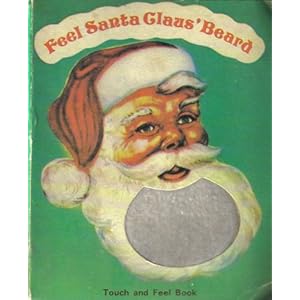
Of course, over the many Christmas years, a plethora of good Christmas books for children have been made, read, remaindered but still read.  No doubt, her favorite Christmas book from her childhood is the 1940 book Feel Santa Claus' Beard, though it's no rival for the elegant The Polar Express.

Whereas The Polar Express ends to twist the heart because the older one gets, the harder it is to hear the bell from Santa's sleigh, Feel Santa Claus' Beard ends, if she remembers correctly, with a happy white family in their colorful pajamas opening presents by a Christmas tree.  It is, as everyone knows, a holy image. And if the social critics are right: a terribly despondent family behind their smiles, just come from re-hiding failure in the attic and God in the deep freeze.

It is the 1950s Caucasian-American Christmas reality ideal, brought to us by the same people who brought us the Pilgrims and their beloved Natives, and set in what is likely the placeless-place we all know as the Midwest: her birthplace, and where Abe Lincoln split logs and walked with muddy feet on the ceiling (have you heard that one?).  Lincoln who, like Santa, wore black boots.

Feel Santa Claus' Beard is one of those sensory books, a "Touch and Feel Book": feel his beard, which really is quite soft and fluffy, and as she remembers, an effective hook into opening the pages to the annual disappointment that no other touch-illustration was as interesting.  For example, there are his black boots, but they are rather shiny.  Then there is the chimney, which is pasted with gravel.  At last come the presents, gold-foiled and much like the feeling of his black boots, which have no especially distinguished feeling.

But it's a durable book, cardboard pages that have lasted thirty years and of the size made to empower children readers because it fits their hands and is image-heavy, useful on the snowy days when children idle about the house in quiet exploration and sometimes belly-down to flip through private worlds made just for them.

She loves this book.  Maybe because this is the Santa image from which all are based on for her, or because he looks like the cardboard Santa face she would tape to the living-room mirror every year, or maybe just because this was part of the Christmas box of books that would be tucked away all year then brought out with the tinsel her mother had dutifully removed from last year's tree and re-packaged in a ziplock bag for next year's tree.

--Along with the ornate silver ball that plugged into the wall and, every ten seconds, chirped like a bird.

Monday, December 5, 2011

Relanguaging: Toward a Definition, Of Sorts and a Bird


Thanks to Jack Kaulfus's recent flash review of Curio by Lauren Ellen Scott , she read "The Brewsters", which is a really smart little thing, a delightful re-languaging romp.   What does re-languaging mean?  It's a word she just made up as a way to describe what Scott is doing.  What Scott is doing is re-languaging.  Although Scott is not the first to relanguage, "The Brewsters" is, for our purposes, a very effective example not only because it's well done, but also because it's SO very well done.

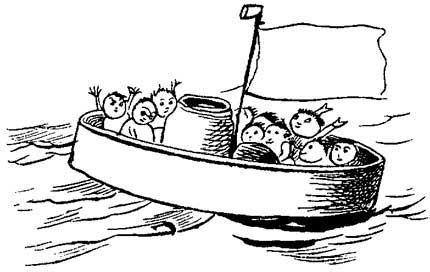
The Jumblies
Edward Lear re-languaged, too.  For an example of Lear's re-languaging (or to figure out more how she's defining this new word), read his poem "The Jumblies".  She thinks you'll find that Ellen Scott and Lear are linguistic friends.  If you enjoy "The Brewsters", then you'll definitely want to read "The Jumblies"--aloud, of course, aloud.

Re-languaging may be a synonym for Nonsense-verse, but it should be clear that relanguaging may not be set on a metered line. But! re-languaging, as a descendant of nonsense-verse, requires syncopation.

Re-languaging is to nonsense verse what early jazz was to blues.

Re-languaging may cause whimsy but the whismy may offset, or collide with, the deep questioning of reality or the suggestion that deep questioning is occurring; although, in fact, due to the effects of re-languaging, the presence of deep questioning may be more an aesthetic effect of the collision between language and meaning.  The aesthetic effect, however, can cause deep questioning in the reader.

It may be the case that re-languaging is more applicable in its use to fiction. If not, and only if, because poetry has a full dictionary of words to describe itself with, and poetry may not accept fiction that re-languages as a poetic form.  It could be argued, and likely someone will (and why not?), that "The Brewsters" is a prose poem and not flash fiction.  The argument, if proven valid, may lead to the conclusion that "The Brewsters" is not re-languaging but doing [insert poetry term].  This person who argues to such a conclusion will likely like clam chowder with a sweet potato on the side.

Re-languaging should not be, however, used as a synonym for experimental writing since experimental writing does not imply or guarantee interesting rhythm--although pieces that re-language may be defined as experimental, and the most interesting experimental writing may re-language.  See Michael Stewart's A Brief Encyclopedia of Modern Magic for an example of this, or Ben Marcus's The Age of Wire and String.  Susan Steinberg re-languages in many of the stories in The End of Free Love, but she is of the held-note variety of re-languagers.
Rain, by Marc Chagall (1911)

(Held-note relanguaging: a distant cousin of Ben Marcus and Ellen Scott, like the compromise between the two, although nothing has been compromised. Style typified by circular, rhythmic language that, as it both circles and progresses, creates a narrative.)

In visual art, re-languaging is closest to this painting by Chagall (when it is worn as a song that sits as a bird on one's heart, clutching):

Perhaps.

!

Friday, November 25, 2011

Writerly Tip: Organizing Story Submissions


Her first submission log was a bag she'd sewn from a jeans pants-leg and then affixed with an iron-on image of an old-fashioned girl.  Here is where she collected all her rejection letters.  Likely the bag is still being stored by her mother, in her old bedroom, in a box full of other rejection letters and notebooks.  No doubt, for a keepsake, this is a lovely way to keep no-track-whatsoever of the writing you have submitted for publication.

Typically, she uses a spreadsheet to track the submissions.  She finds it best to keep everything as simple as possible so that she's more likely to use the log/calendar. 


Story Magazine Submission Type Notes to Self Date Replied
11/12/11
Every Road New Fangled Review submishmash - pdf from August 2010 folder query after four months 11-13-11, form letter, don't send again, response too quick
Every Road Next Journal email to editor, Jane Doe pays penny/word
The Snow-Cone Stand Lulu Story Contest  Contest requires e-book creation, uploaded on site mid dec results announced


She places the date submitted in the story column and highlights it.  This is also helpful for tracking the last time she did a large batch, and it's easier to compare response times of journals.  

Until a magazine rejects a story, she keeps the row in bold.
When a magazine accepts the story, she highlights the row in purple.


Why keep a submission log for writing?
  • To know when it's time to query about a submission that's been held longer than the magazine's stated response time.
  • To have the information necessary to write a professional query, e.g. I'm checking on the status of my story, "The X to the Y", which I submitted on such-and-such date.
  • If you're a gambler, to keep track of how much money drained in contest entry-fees.
  • To keep track of postage, envelopes, paper for tax purposes (or in hopes that one day these can be claimed on taxes)
  • To keep track of writing; for example, sometimes she'll subconsciously give up on a story, forget about it, then find its title in the submission calendar
  • To rally one's spirits or realize that the number of a rejections a piece of writing has had may mean you need to open it up for revision.
  • To keep track of editors - a cordial or personal note from an editor means that, even if rejected, this is a person you would want to work with in the future and, thus, to submit to again.


For an article regarding rejections, 
how to interpret them, and 
the current situation 
with online rejections, 

Thursday, November 24, 2011

Happy Human Day!

One must try not to imagine what will be served at the dinner these turkeys are going to (or what they've already eaten).


Happy Thanksgiving!

Wednesday, November 16, 2011

"The Skydivers" Forthcoming in Emrys Journal, Spring 2012

Emrys Journal logoEmrys Journal has accepted her story "The Skydivers" for publication in their Spring 2012 issue. This will be her first publication with Emrys.

Tuesday, November 8, 2011

"The Rabbit" Forthcoming in Big Pulp, March 2013


logo Big PulpHer mini-story "The Rabbit" (not to be easily mistaken with her story "Rabbits" from The Floating Order) will be published in Big Pulp in March 2013. This will be her third publication with Big Pulp, which is lovely because it's one of her favorite venues.

Pringle-Toungate's previous publications with Big Pulp are "Every Good Girl Does Fine" and "Palestine, IL".

Update 3/30/13: The Rabbit is now available to read. Click here or copy/paste this link into your browser: http://bigpulp.com/issues/2013_03/pringle_therabbit.html#.UVeb9hemiAi 

Friday, November 4, 2011

E-story Experiment: The Snow-Cone Stand


Cover The Snow-Cone Stand
With the rising popularity of e-readers, she has now and then considered self-publishing a single story. She has romantic ideas of photocopying thousands of copies of a story and dropping them on a city or handing them door to door. It's ridiculous, of course--that much paper.

Certainly, the music industry has been changed by the user's ability to download single songs, and she has wondered how that might bleed into the publishing industry--or how that might provide her a little more control, now and then, of getting her work to her readers by self-publishing a single story. She found her valid excuse with Lulu.com's 600-word short-story contest.

Basically, writers submit a story of 600 words or less, convert the story into an e-book, and upload it on Lulu. Later, Lulu judges will declare whatever story the winner.

The contest is not dependent on how many times the story is viewed, and she also couldn't find anything about not charging people for a contest story (so Lulu will be making money off contestants who do sell their contest entry). Regardless, she's giving her story away for free.

After taking several hours to format a tiny story, she thinks she'll go back to her old-fashioned route of letting editors do their jobs and she hers. But that doesn't mean that she wouldn't like you to have it, dear reader.

Download and read "The Snow-Cone Stand" at Lulu.com, iTunes, or Barnes & Noble.--Especially since she might have disqualified the story by putting an image on the cover. Ah, well.


Cover photo by Keoni Cabral,
used under a Creative Commons License
***


Post Update 4/20/12:


Project Retired

Saturday, October 29, 2011

"Winter's Wooden Sparrows" in Lake Effect

photograph by Dirk Wustenhagen Getty Images The first time he felt a need to walk, he was a boy of six or seven. He had awoken one winter morning with the urge to be outside, alone. And so decided to go, and felt the good feeling that decisions often have. He zipped on his snowsuit, wrapped his face in his scarf, and left the house while his parents slept.


The early sun was somewhere behind the bright gray sky, and the snow was so bright he couldn't look at it without forcing himself, but he forced himself and felt the strange, pleasing feeling of snow-dazzled eyes. The snow in front of the house was not new, mussed with boot-tracks filled with gray water; but the snow in the back still followed its own created planes, on and on, untouched—and it was this that guided him to take his walk in the back. He walked and listened to the crunch of his boots and felt the cold air. A few black birds crossed the sky like a meaningless thought. Beside him trotted the ghost of the old dog that had died recently enough to still follow him.

Read the rest of "Winter's Wooden Sparrows" by Erin Pringle-Toungate in Lake Effect, due out in January 2012  Now available

Photo used from Getty Images, with permission/
Dirk Wustenhagen Imagery

Wednesday, October 26, 2011

Writers Run, Too

Her friend and a fellow writer, Stephanie, will be running as part of the Komen Race for the Cure in Austin, TX. To donate to the cause, via Stephanie's running shoes, follow this sentence to her donation page.

She thinks this is worthwhile. The number of graves due to breast cancer, among other cancers, is more than wearisome.


Friday, October 14, 2011

New Interview Up: Fear, Halloween, and an Enchanting Talk

Erin recently sat down with her sister-in-law, Misty, via computer and across 2,000 miles, and chatted about Halloween, making stories, making childhood, making memories.

Here's an excerpt:

photo of Erin Pringle-Toungate as child Misty: Did you visit graveyards as a child? Since reading The Floating Order the first time, I have wondered if we had this in common. I'm sure my brother has told you about our adventures in graveyards prompted by our grandmother.


Erin: We lived down the road from one, and so we drove past a graveyard every day. The schoolbus took the same route. I remember my mother getting into genealogy and so that took us to graveyards, making rubbings and such. Graveyards captured my imagination. Everyone who had lived in the town had ended up in one. Then, part of the town's teenage folklore included visiting either graveyards or places where hauntings might occur in the country. I was part of the drive-out-into-the country crowd, though mostly I just heard about what would happen if you went to the bridge and did such and such. I was never very brave or popular enough to find myself very often at such "haunted' sites but would imagine what I would do were I.


But graveyards have never ceased to interest me, maybe more now since I know more people who now exist in them. So I do visit more now, though not so much the ones where I know the people whose names are on the stones. For example, the graveyard in Fredericksburg, TX is a really intersting one because of the amount of children's graves-- and that the children's graves are in their own section and many of them have metal bassinets made around them. Graveyards understand grief. I find them to be empathetic places to go.


Read the rest of the article and interview, "fear and an enchanting talk", at the blog senseMaking.

Saturday, September 17, 2011

"This Bomb My Heart" in War, Literature & the Arts

logo WLA
Out in the vast field, she kneels under the wings her brother made when she lost her arm. He sawed them from a storm-fallen tree then picked a wheelbarrow of Queen Anne’s Lace from the field and ditches, spreading the stems across newspapers on the porch as their mother once had. When the flowers dried, he glued them over the boards then spray-painted the wings white. He screwed the wings to the front of his drum harness from marching band. She wore the harness backward, as she does now over her winter coat, though the wings are patchy and he’s dead.
Read the rest of "This Bomb My Heart" by Erin Pringle-Toungate in the new issue of War, Literature & the Arts (volume 23, 2011)


Thursday, May 19, 2011

"The Lightning Tree" in Box of Delights, anthology from Aeon Press

cover Box of DelightsThe house has the empty feeling cleanliness or new death brings.
She touches her neck. Her heart like a leaf scared by the wind.
The wind presses against the window panes
She turns to the other side of the pillow, imagining her pupils like two broken, erratic lenses, like two puddles on a country road to nowhere with a sky, like skull sockets dark as death—death always. Death that makes and diminishes all our gods.
She reaches to her husband's side of the bed.
He isn't there.

Finish reading "The Lightning Tree" by Erin Pringle-Toungate in the anthology Box of Delights, published by Dublin's Aeon Press.

Sunday, May 8, 2011

In Celebration of Mother's Day: The Woman Who Helped Author Me

Last June, she interviewed her mother to find out what her mother might think about reading, writing, and more:


What excited you more—learning to read or learning to write?
Photograph Carol Pringle, child in Evansville, Indiana
Mother Pringle as a young girl, 1940s
Evansville, Indiana
I don’t remember learning to write. You’re assuming I was excited to learn to read. It was just part of what you learned. I remember in second grade being bored. Because everyone read together, and the slow readers took longer. I know I sighed. First grade you learned to read, second grade you learned to tell time, third grade you learned cursive. You knew what you would learn. No, fourth grade we learned cursive. I was impressed by that. But we had ink pots. You couldn’t control the ink. Big blobs. That was before ball-point pens were invented, apparently.

To read the rest of the interview, click here

Saturday, May 7, 2011

Daffodils were open in St. Stephen's Green

(Outside Amsterdam airport)

In March, she flew to Dublin to be a guest at the Eighth Annual Phoenix Convention. She stopped in Amsterdam and had wine and lunch with an old college friend from Brussels. They found that even after a few years and so much ocean between them, they were still tied at the souls in important places, and so when their glasses were empty and the time what it was, they parted.


When she arrived in Dublin, she took the 16A bus to the convention's site at The Central Hotel and would have missed her stop had she not sat next to a lovely woman who didn't say a word until Georges Street. The lovely woman wore a black coat. and was a guest in Dublin, on business, and would be speaking as an important person part of an important event. Or so it seemed, based on what she said into her telephone.

Had she found that breakfast was served at the hotel downstairs, she would have avoided an embarrassing scene the first morning, which took place at a convenience store and ended with an irritated clerk, a currency problem caused by Wells Fargo, and the clerk basically giving her the bun and snapple. She ate her bun and drank her drink outside, on a cold bench on Dame Street. She leaked jam on her skirt and thought, I'm such a stupid American.

(Sculpture dedicated to Yeats,
picture by Erin Pringle, 2011)


Luckily, her day could not be totally shot since, before the bun incident, she had strolled through St. Stephen's Green and found the daffodils blooming up. She also took some pictures for her husband, like this one, of Yeats. It was a peaceful place except for all the sculptures to those who had died as part of defending Ireland during the Easter Rising or events that followed. The sculptures, then, were doing as they were intended and keeping Dublin's history present in its present.

She took part in several panels and attended several panels ranging from how to think about the event of the e-book as a writer, to the rise of the graphic novel in publishing. She drank several Baileys and promised several times to attend other, future conventions. She was told several times that the economy wasn't what it was since the last time she was there, eleven years ago. She had new thoughts about publishing, writing, and marketing and came away feeling less threatened by the e-book and more empowered by it now that she has an idea of how to think about it.

On Sunday, she gave a reading in a private room in the Library Bar. The audience was warm and welcoming and took their lunch as they listened. The sun came through the windows, and the people went into the faraway places she had made for them.

Photograph of Georges Street, Dublin 2011 by Erin Pringle-Toungate(Up Georges Street, Dublin,
Photo by Erin Pringle-Toungate)


Then she flew back home, and hardly believed she had been in Dublin. Most of all, she came home feeling far less worried about being a writer, or reader, or general citizen of the world--because she met good people who think writing and reading is important and worth meeting to discuss. Everyone was so warm and welcoming at the Phoenix Convention, and she wishes it many more good years. She thinks of those few days in Dublin like the cool, sweet air she had felt in St. Stephen's Green.


Sunday, May 1, 2011

Real Surrealism: 1955 Documentary, Night & Fog,

Cover of documentary Night and Fog
Directed by Alain Resnais, Night and Fog (Nuit et brouillard, 1955) is a 31-minute film that ponders the Holocaust at the sites of abandoned concentration camps.

While an unseen narrator answers what he can and gives words to the questions that have more questions, the film moves between footage of camps during their activity and present-day (1955) footage of the camps.

The film is elegy whose poetic brevity and honesty make it an extremely respectful film, though the footage is, of course, utterly the opposite, utterly surreal. A camera slowly panning out on all that hair, so much hair, just hair taken away. Stored. Spun into cloth. By someone. Someone's hair spun by someone. So many someones.

A trillion eyelashes to wish on.