Wednesday, May 9, 2012

Box of Delights Anthology on Kindle

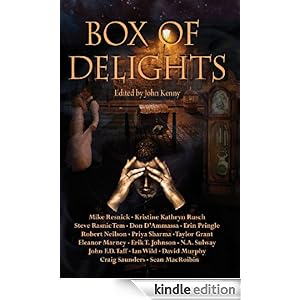
Aeon Press's Box of Delights, Cover
Winter 2011 - KINDLE VERSION
Box of Delights, edited by John Kenny and published out of Dublin, Ireland, is now available on the Kindle.

It may be National Short Story Month in the U.S., but if you want to make your celebration an international one,  try Box of Delights, an anthology of contemporary horror fiction by 16 writers around the world.  Her story, "The Lightning Tree", is one of those stories.


Box of Anthology writers 
(links follow to the writer's webpage)

Sean MacRoibin
Eleanor Marney
Erin Pringle

CLICK!
a) here for the U.S. Kindle edition of Box of Delights
b) here for the U.K. Kindle edition
c) here for a print copy of Box of Delights


Short-Story Month 2012: Day 9, Concerning Ghosts by Michael Stewart


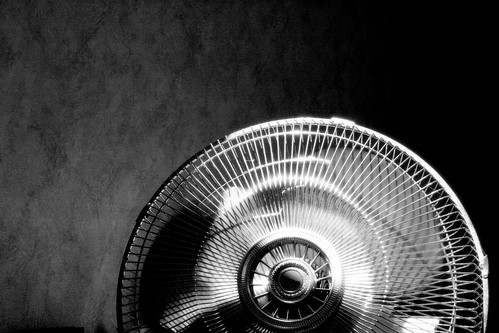
Black and white photograph of a wire fan
"Fan" by Mike Schmid,
Used under CC license


"My ghosts move as trees age." 


National
Short
Story
Month 

Day 9.

                                          Selection.


                                                            "Concerning Ghosts" by 
Michael Stewart


Tuesday, May 8, 2012

Send Giants: Maurice Sendak Left Today

Photo by Michael M. HughesAll Rights Reserved ,
used with photographer's permission


Send Giants:
An Elegy in 2012


May 8, 2012

Dear Mr. Sendak:

Please tell the lion that you care (even if you don't), and it will maybe let you come back. Speak very loudly because it's dark in there, and according to the newspapers, its mouth is shut tight. And this lion never gets sick when it eats. 


Or maybe we can send giants. They can shake you out. 

Then the newspapers can print a correction tomorrow, like they do and nobody catches the correction because they're not looking or don't even get the paper the next day and so they keep thinking the wrong thing the reporter wrote.  But I'll look for it. 

Your Friend,
Erin, age 5 30


*


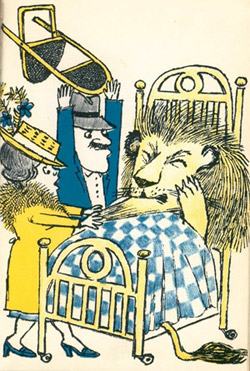
Picture from Pierre of lion sick in bed, having eaten Pierre, and now Pierre's parents are hitting the lion with a folding chair.
From Pierre by
Maurice Sendak (June 10, 1928-May 8, 2012)
"I have nothing now but praise for my life. I'm not unhappy. I cry a lot because I miss people. They die and I can't stop them. They leave me and I love them more. ... What I dread is the isolation. ... There are so many beautiful things in the world which I will have to leave when I die, but I'm ready, I'm ready, I'm ready." 

Short-Story Month 2012: Day 8, Roots by Chadwick Redden

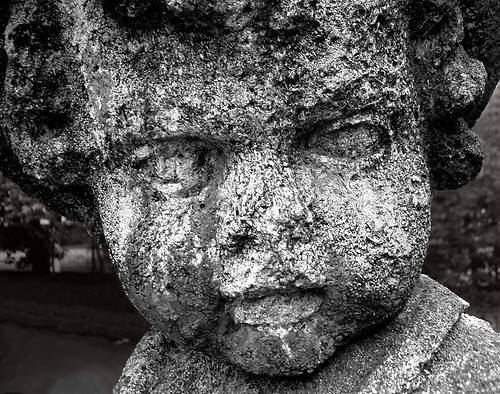
Photograph in black-and-white of tree roots under cirrus sky
"Ghost Trees" by Rosino,
Used under a CC license
Welcome to Tuesday, the eighth day of National Short Story Month.  Today's selection was recently published in the literary journal red lightbulbs, an increasingly exciting location for new and interesting poetry and fiction:


"We drove ninety miles south to watch the lunar eclipse. Light pollution and cloud cover all the way down. In a field your shoelaces forgot their knots . . ."


"Roots" 
by Chadwick Redden
(2011)

Monday, May 7, 2012

Short-Story Month 2012: Day 7, All the Anne Franks by Erik Hoel

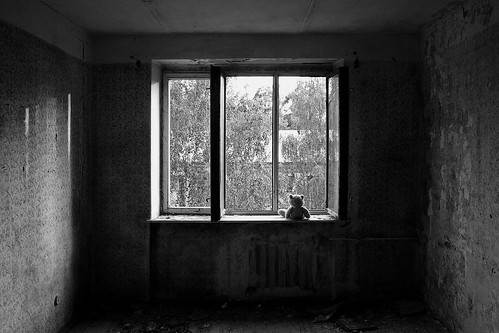
Photograph of child's bear looking out window in empty room
"Lone Russian Bear" by jzool,
Used under CC license
She found today's selection for National Short Story Month a few years ago when she decided to nominate a story for the annual Million Writers Award and ran across this story in Strange Horizons:

"When the aliens came and cut the sky up into golden ribbons Dan Milestone ran inside to get his daughter Margaret and put her up on his shoulders in the front yard and told her that this was history and she told him to put her down because he was embarrassing her."


by Erik Hoel
(2009)

Sunday, May 6, 2012

Short-Story Month 2012: Day 6, The Juniper Tree

The Juniper Tree
by Paleontour,
Used under CC license
My Mama She Kil't Me
My Father He Ate Me
Oh, What a Good Boy Am I!


It's Day 6 of National Short Story month, and today's selection is the folk-story, 
"The Juniper Tree"


A long while ago, perhaps as much as two thousand years, there was a rich man who had a wife of whom he was very fond; but they had no children. Now in the garden before the house where they lived, there stood a juniper tree; and one winter's day as the lady was standing under the juniper tree, paring an apple, she cut her finger, and the drops of blood trickled down upon the snow. "Ah!" said she, sighing deeply and looking down upon the blood, "how happy should I be if I had a little child as white as snow and as red as blood!" And as she was saying this, she grew quite cheerful, and was sure her wish would be fulfilled. And after a little time the snow went away, and soon afterwards the fields began to look green. Next the spring came, and the meadows were dressed with flowers; the trees put forth their green leaves; the young branches shed their blossoms upon the ground; and the little birds sung through the groves.  And then came summer, and the sweet smelling flowers of the juniper tree began to unfold; and the lady's heart heaped within her, and she fell on her knees for joy. But when autumn drew near, the fruit was thick upon the trees. Then the lady plucked the red berries from the juniper tree, and looked sad and sorrowful; and she called her husband to her, and said, "If I die, bury me under the juniper trees." Not long after this a pretty little child was born; it was, as the lady wished, as red as blood, and as
The following version is from the 1875 collection, German Popular Stories, edited by Edgar Taylor.

Click to 
The Juniper Tree! 

Saturday, May 5, 2012

Short-Story Month 2012: Day 5, The Brewsters by Laura Ellen Scott

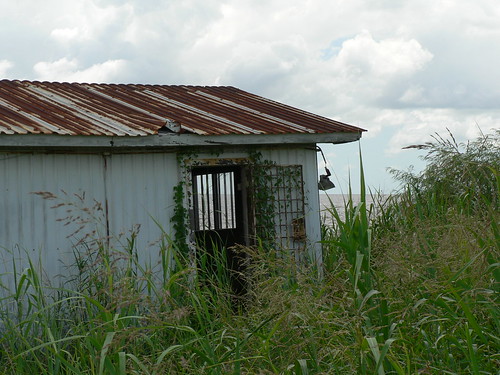
Metal shed overlooking waterfront
Room with a View by Rick Kempel,
Used under CC license
"We always called that rusty metal shack the Brewster house."

In continuing the celebration of National Short Story Month, today's selected story is this linguistic beauty:


by Laura Ellen Scott
from her collection Curio
(2011)

Friday, May 4, 2012

Short-Story Month 2012: Day 4, Diagnostic Drift by Michael Martone

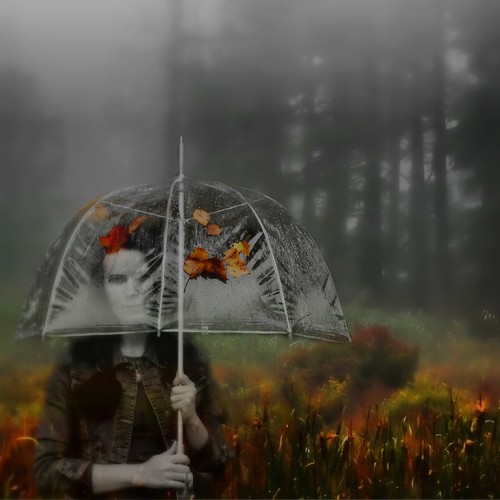
Photograph of girl under autumn umbrella
Transparent by Kasia,
used under CC license
Since 1996, April has belonged to the poets.  But it has only been a few years, at least in her memory, that May has been unofficially officially declared National Short Story Month.

So, to celebrate the art of the short story, each day of May a story will be selected and posted at What She Might Think.

Since we're four days in, rather than catch up with four different stories, here's a lyrical short story in four parts:


 "Diagnostic Drift" by Michael Martone  


Saturday, April 28, 2012

The End of National Poetry Month, 2012

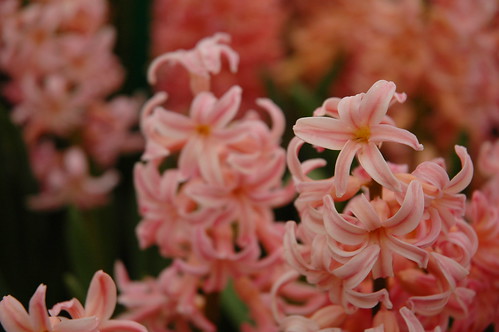
Photograph of pink hyacinths
Hyacinth Happiness by Lachlan Rogers. (CC)
We are at nearly the end of April, which means it's the end of this year's National Poetry Month.  


And, so, a bit of a medley to celebrate poetry month in a single shot, if you haven't already been celebrating. 


One passage like a poem, one poem, one poet, one excerpt.


A passage like a poem:
1) “Once a little boy sent me a charming card with a little drawing on it. I loved it. I answer all my children’s letters — sometimes very hastily — but this one I lingered over. I sent him a card and I drew a picture of a Wild Thing on it. I wrote, “Dear Jim: I loved your card.” Then I got a letter back from his mother and she said, “Jim loved your card so much he ate it.” That to me was one of the highest compliments I’ve ever received. He didn’t care that it was an original Maurice Sendak drawing or anything. He saw it, he loved it, he ate it.”    —Maurice Sendak

A poem:
2) Eating Poetry by Mark Strand 


A poet:
3) Also, if you haven't read the Interview with Laura Read, a poet, then there's this, too.


An excerpt from a poem.
4)
“You gave me hyacinths first a year ago;  35
They called me the hyacinth girl.”
—Yet when we came back, late, from the Hyacinth garden,
Your arms full, and your hair wet, I could not
Speak, and my eyes failed, I was neither
Living nor dead, and I knew nothing,  40
Looking into the heart of light, the silence.

                                             (from The Wasteland by our man T.S. Eliot)

Tuesday, April 24, 2012

How the Sun Burns: Forthcoming in The Minnesota Review

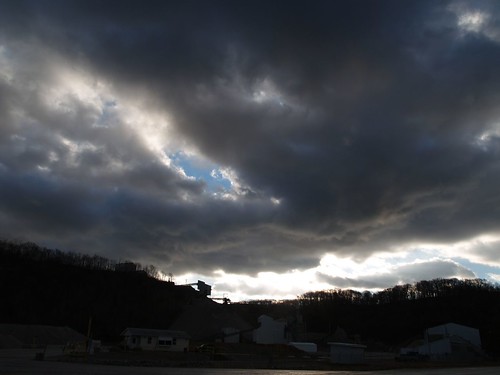
Photograph of stone quarry near nightfall
Rock Quarry
by paparutzi (CC)
 The minnesota review has just accepted her story "How the Sun Burns Among Hills of Rock and Pebble", which will be a story in her next book Midwest in Memoriam. 

The story is slated for Spring 2013 publication.

Cheers!

Thursday, April 19, 2012

To Shift & Grit: New Review of The Floating Order


"It’s Pringle’s ability to get inside the mind of a child and see the adult world from their perspective that is the real strength of this collection. Another is the shifting nature of reality from this perspective."

Photograph through a green bottle
Faye Through Glass
by Aislinn Ritchie (cc)


~writes John Kenny, in a new review of The Floating Order. Kenny is a writer, and co-editor of Dublin's Albedo One and Aeon Press. Please find the full review at his website.

Monday, April 16, 2012

One Bull-Running Over: 2012 Pulitzer-Prize Winners Announced

Image of 1970 Pulitzer Prize medal
Pulitzer Prize Medal
All those running in fiction were trampled, no one survived.

The announcements might get a bit more press this year since, of the list of winners, the winning work of fiction is a blank space--the committee decided that none of the finalist-books in the fiction section merited the Pulitzer.  Finalists, but not fine enough, evidently for more than that.

According to the administrator of the prizes (via the L.A. Times), This isn't the first, but eleventh, time to happen in the fiction side of the Pulitzers.

No doubt this decision will raise a flurry of discussion in the fiction world--among writers, editors, publishers, and readers.  For, while we've gotten the memo that there was no prize, now it's time to decide, or consider, what the memo means in terms of what the committee is suggesting about quality.

Photograph of Picasso drawing a bull in light
Picasso and the Bull Out of Light, in Life
And, perhaps, another sort of discussion will occur from this in regards to the $50 "handling" fee that must accompany each work (and four copies of each book) submitted into the running for the Pulitzers.  A $50 fee that is hardly a scratch on the bucket for the large presses, but the weight of a brick in the bucket for small presses.

For a list of all the winners, visit the Pulitzer website.

***
The next running of the writers is for The National Book Award. Deadline for submission is June 15, 2012 (postmark date).  Works published between December 1, 2011 and November 30, 2012 are eligible . . . but with eligibility also must come a publisher who can afford these conditions (among others) of the prize:


All publishers submitting books for the National Book Award must agree to:
  • Contribute $1,000 toward a promotional campaign if a submitted book becomes a Finalist.
  • Image of National Book Award MedalInform authors of submitted books that, if selected as Finalists, they must be present at the National Book Awards Ceremony and at related events in New York City.
  • Cover all travel and accommodation costs for Finalists and provide them with seats at the Awards Ceremony.
  • Purchase from the National Book Foundation, when appropriate, medallions to be affixed to the covers of Finalist and Winning books. [bold, mine] The Foundation will also license the medallion image artwork for reproduction on the covers of Finalist and Winning books.
  • Inform authors that, if selected as Finalists, they must agree to participate in the Foundation's website-related publicity.

Thursday, April 12, 2012

Emrys Issue 2012 Now Available

Cover photo of Emrys Literary Journal, 2012
Her short "Skydivers" is in the new issue of Emrys Journal (Volume 29), which is now available for purchase


Emrys Journal is a part of a large-scale arts group out of South Carolina that supports writers and artists through scholarships, activities, lectures, and much more.


Cheers!

Literarily Speaking: GetLit! in Spokane, 2012

Childlike illustration of tree with leaves and birds for 14th annual GetLit! festival
A strange phenomenon is currently happening in Spokane. The readers have crept out from their reading chairs, the writers out of the coffee shops and studies, and the libraries are empty for a different reason.  Even the airport is taking part, in its way, bringing us a Poet Laureate, Ted Kooser, and Lois Lowry, award-winning writer of children's literature.

A festival is upon us, friends!  It's time for the Spokane, WA annual event: GetLit!

All week Spokane is celebrating the word--spoken and on the page. Today, for example, there are poetry slam competitions happening, from grade-school-age to college-age.  On Saturday, workshops and panels all day, and then, a play that night.  On Sunday, Kooser will read and be interviewed by the poet Christopher Howell.  And, of course, much, much more!

From the 10th to the 15th, writers and readers will mingle among words and, sometimes, wine.  From one side of town to another, it's true: Spokane believes in writing.

*

For the calendar of events, please visit the GetLit! website.

**
Update: She read as part of the Inland Northwest Faculty Reading at Barrister Winery, and was quite glad to be a part of listening and sharing work in such a lovely space.

Saturday, April 7, 2012

Butterfly Fears Heights

Cover photograph with one dog-person holding a butterfly while another dog-person tries to fly
Photographers Kirby and Cindy Pringle have finished their third Happy Tails children's book, The Butterfly That Would Not Fly.  Main characters, Earl and Pearl, discover an acrophobic butterfly and attempt to help the butterfly migrate to Mexico.

To pre-order a copy of The Butterfly That Would Not Fly, go to the book's page on kickstarter.com.

Kickstarter is a website where artists post either project ideas or completed projects in order to  find funding.  Sometimes, the artist(s) asks for a partial amount necessary to fund the project, outside of other funding that they already have; or the artist(s) asks for full funding.  

Book photo of two dog-people wearing sombreros and trying to send butterfly to winter homeThe Pringles are offering pre-order of The Butterfly That Would Not Fly through Kickstarter in order to help defray the printing costs for the 32-page, full-color book. Readers may contribute any amount to the project; with a $20 donation comes an autographed, and paw-o-graphed, copy of the book.

From the photographers: "We're very excited about the new book. We also hope to inspire people to grow flowers and milkweed to help the butterflies."

For more information about the Pringles, outside of their Kickstarter page, please see their website, Dogtown Artworks.

Thursday, April 5, 2012

Story Forthcoming in Glint: The Midwife

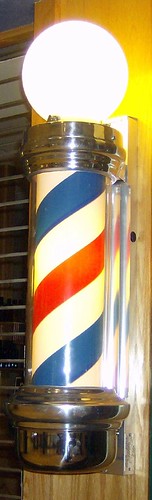
Photograph of lighted barber pole
Barber Pole
by Sally M,
Used under CC
license
Her story "The Midwife"
will be is published in the
May June 2012 issue of Glint.  

"The Midwife" will be
in her next book
Midwest in Memoriam.

Story Summary:
Susan has inherited
the barber shop
business that has
been passed down
through her family
for several generations.

She has also inherited
the delivery end of the
business.

Wednesday, March 21, 2012

Roll-Call for Readers: Do You Exist?

Photograph of ring in open spine of book, casting shadow of a heart
Attribution Some rights reserved by MissTurner ,
Used under CC license
So, she has been working on her syllabus for the Creative Writing class that she'll be teaching in a few weeks.  A stack of books is teetering on her table, sticky-noted at this story or that poem her students will read and discuss on days they aren't discussing their own creations.

Meanwhile, she has also been reading outside of these books, and maybe it's just her luck, but she keeps landing on rather depressing articles.  For example, Nicholas Carr's article, "Is Google Making Us Stupid?" in which he discusses the way internet reading is affecting our brain patterns and, thus, ability to read deeply.  It's the true, sordid tale of how once-avid readers are losing their reading skills, much like a piano player who, after a twenty-year break, returns to the bench to find that her fingers have lost their songs.

Then, there's a more recent article out in The Chronicle of Higher Education, entitled "We Can't Teach Students to Love Reading"; here, Alan Jacobs compares reading habits from the advent of the printing press to the shift in post WWII students to present-day reading.  Some of his essay is a response to Carr's book that was inspired by the above-mentioned article. Jacobs concludes that, and she thinks rightly, that it is a much different task to teach students who have never experienced deep-reading how to do that by college but that it is more possible to reinvigorate those who have, at some time in their lives, experienced deep-reading and the benefits and joys.

A more, perhaps, uplifting article in The New York Times came out last week entitled "Your Brain on Fiction", which summarizes recent studies that show how the brain is triggered by reading fiction in similar ways as to when it's having sensory experiences outside of reading. Of course, it's a bit disheartening that anyone should have to go to such lengths to prove that reading is beneficial, but that the studies existed and an article was written to relay this information is one of those "sign of our times".  She supposes.  Because while it's nice that people are taking the time to research such things, the conclusions are akin to what Ian Frazier lampoons in his essay, "Researchers Say".
Photograph of a man standing in front of overflowing book shelves in open market
AttributionNoncommercial Some rights reserved by Roel Wijnants,
Used under CC license 

But, see here, it seems to her that it might be awfully depressing to be a [starting] writer right now, especially since all these reports keep being released about how people aren't reading anymore, or how, for example, there's evidently something wrong with Oprah for elevating the reading taste of her followers because readers with higher literary tastes don't buy market romance.  (Oh, Culture Industry.  Oh, oh, oh.)


So, this is what she would like: 
One sentence, but no more than ten sentences, in which you explain


1) why you read fiction or poetry (or both), OR 
2) what you look for when you go hunting for a new book, OR 
3) who your favorite writer is and what it is about his or her writing, you think, that draws you back, OR
4) why you no longer read fiction or poetry


Photograph of discarded book stamp card
Attribution Some rights reserved
by 
gypsy999, Used under CC license 
Just post your mini-essay at the bottom of this blog.  Feel free to stay anonymous, although it would be nice if you could state both your general location and age (Ohio, U.S., 41-years old).

Her idea is to then print out the answers for her students and discuss them since, after all, you, reader, are one of their potential audience members in years to come.

For one, she hopes that the responses will encourage her students to know that readers do, in fact, still exist.  And, two, she hopes that the responses will show the variety of readers who read and for a variety of reasons.

Think of this as a sort of  Roll-Call for Readers, a sort of rallying anthem for the troop of writers she will meet in a few weeks and then teach for the next few months.  Writers who, no doubt, have been told already that no one reads anymore and that there is no life in writing about people who don't exist for people who don't exist.


Do you exist, reader?  


(Click on the title of this post to access the comment form.)
Friday, March 9, 2012

Inside Their Eyes: Shelter Dog Portraits

Something lovely has been happening in Tuscola, Illinois at the Douglas County Animal Control and Shelter.

Her brother and sister-in-law, Kirby and Cindy Pringle, are professional photographers with a deep fondness for animals, and have begun volunteering at their local animal shelter by photographing the shelter dogs. The shelter then posts the animals' photographs on their Facebook page, along with adoption details.

Whippet, photograph by Dogtown Artworks
What seems like every day, another elegant photograph of a recent addition to the shelter is posted, which becomes a rather disheartening situation because the photography is beautiful but another animal-in-need is not.

As the Facebook page unfolds itself, it is simultaneously becoming a sort of online art gallery.  A gallery that testifies to the bond between dog and human, and the effects the loss of such a relationship has on our dog-friends.

Often, adoption photographs of shelter dogs feature them in the kennels, behind chain-link fence or wire, and the cages often act as a barrier between the viewer and dog, thus causing the dogs to seem as though they deserve to be there--since the nature of the cage is to confine, to isolate, to keep what must be dangerous out.  
Brindle-Mix, photograph by Dogtown Artworks
These non-traditional adoption ads allow the dogs to communicate to the viewers with dignity.  Here, the dogs are allowed to show themselves outside of the fence, in the way that animals at shelters would if they weren't there.

A shelter is--at least for the ones she has visited--an often anxious, stressed environment that would drive anyone, dog or human, into rattling their cages, staring off, or barking despondently, no matter how friendly their hearts and sweet their temperaments outside the cage.

But shelter behavior, of course, is often enough to make the potential adopter move onto the next kennel, and the next (often past the adult dogs and toward the puppies), or maybe just out the door.

These are empowering photographs, and a beautiful testament to the power of art and the power of the bond between ourselves and our dogs.  Together, the world of longing and love is put into better focus.

These are our undesirables.  But the Pringles are showing us how to see them as they are: full of desire.
_____________________________________

To view more of the dogs at the Douglas County Adoption
or for information about volunteering or donating, 
please visit their Facebook page.

For more information about the photographers, 
see their website, Dogtown Artworks.


Three puppies at Douglas County Shelter,
photographs by Dogtown Artworks

Thursday, March 1, 2012

Lake Effect 2012: Now Available, Contains Sparrows

Underwater design moss green for literary journal cover
2012 Issue of Lake Effect,
Cover Art and Design
by A.J. Noyes

Published out of Penn-State Erie, the new issue of Lake Effect (Volume 16/Spring 2012) is now available for purchase. Her story "Winter's Wooden Sparrows" appears within its pages.

This is her second time working with Lake Effect, as six years ago they published my story "Digging" (Issue #10), a story about a girl and boy who discover their siblings and father buried in the forest.  "Digging" is in The Floating Order, while "Sparrows" will be in her next book, Midwest in Memoriam, which she recently began sending out to publishers.

If a pattern has begun, then in six more years she''ll have another story for another book.  That's a rather nice idea.

Photograph of terrier-mix laying on open book
Our dog Gretta does not like to read recommended works,
evidently, but she had a long day
(Copyright Erin Pringle-Toungate)

The Nortang Bears Forthcoming in Sand Journal

Photograph of various covers for the literary journal SAND
Image from here
A bit of lovely news:

Her very short prose piece, The Nortang Bears, has been slated for publication across the waters in SAND Journal, an English literary journal based in Berlin, Germany.

Due out in May 2012

Wednesday, February 22, 2012

Robert Pinsky in Spokane, February 2012

Former Poet Laureate, Robert Pinsky, will be in Spokane February 28 and 29.

Stock photo of laurel wreath
Laurel wreath,
from here
Gonzaga University: February 28, in the evening 7:30-8:30, Cataldo Globe Room

Spokane Falls Community College: February 29, 11:30-12:30, in sn-w'ey'mn, Building 24, Room 110

Both reading events are free and open to the public.

Friday, February 10, 2012

From the Child's Shelf: Sendak's No Bumbler


Sendak, Maurice. Bumble-Ardy. New York: HarperCollins, 2011.


Maurice Sendak's new book Bumble-ardy is the story of a pig celebrating his first birthday party, which is his ninth birthday. The backstory, which is told in preface, is that Bumble-ardy's family "frowned on fun", which explains his lack of birthdays hitherto, and his parents were recently killed. Although his parents were butchered, the fact that humans would have been the ones to murder them isn't emphasized. And so, all readers of the book are immediately set up as the antagonists to this world. 


The story begins with Bumble-ardy moving in with his aunt and his decision, against her wishes and knowledge, to throw himself a birthday party. A masquerade party. The party lasts most of the book as the animals, dressed as humans, drink "brine", dance, and celebrate the life of Bumble-ardy--and, as such, life itself. But it's a strange dance to celebrate an equally strange life. Without surprise, as it is with any celebration of life comes life's comrade-in-the-wings: death. 

When any talk of controversy or irritability about Bumble-ardy rears, it's typically in regards to the presence of death (although, a cursory glance at the GoodReads page for the book suggests that adult readers are equally irritable due to Bumble-ardy not being Where The Wild Things Are). 

However, death is not a focus of the story, is never central to any page, stands in the background, and only becomes apparent on subsequent reads. Perhaps it is death's representation as natural and part of the scene that causes some readers to focus and dwell on it, and in dwelling, become concerned that their children are dwelling in the same ways. Perhaps if readers view death as unnatural and something to be feared, heckled, ignored, repressed, and otherwise stricken from reality, then Bumble-ardy works as a counter to those notions. 

Thursday, February 2, 2012

EDITOR IN OZ: May be human, only behind curtain

When I attended the Dublin Phoenix Convention as a guest last year, I met John Kenny, co-editor of Albedo One magazine. During the convention he solicited a story from me, which I then wrote for the Aeon Press anthology he edited, entitled Box of Delights.  Because I had a good experience with him as an editor, I started following the blog he recently began.  And he recently wrote a good blog article on submission strategies for writers.

It stood out to me for a number of reasons, one is likely because I find myself in a rather new situation as a long-time submitting writer: I have a number of new stories, and all of them are thirty-to-forty pages long.  Most magazines no longer accept story submissions of such length, and those who do typically cut off at 10,000 words. The few remaining either charge a $3 "reading fee" to submit or don't seem really that interested in reading long stories to begin with.

Of course, what writer with half a thought in her head would decide to write long stories ("novelettes", suggests Duotrope) at the very moment everyone else has decided that a story the size of a dead leaf is best?

Image of Writer Submitting Stories Pre-Ebook
Needless to say, I've been spending some additional hours thinking about submissions and, in many ways, feel like I'm re-experiencing what it was to send out my stories when I was 15.  Except it's not as exciting, the dazzle is gone, I don't save all my rejections in a jean purse, and online form rejection letters are--as I'm noticing--often made to seem like they're not form letters, which makes the task of submitting (and managing them) all the more frustrating.

In the good old days, the rejection form, and its variants, implied a certain code to the writer based on how it was written and signed.  Little differently, I would assume, than how a writer's cover letter--its formatting, tone, and content--will say something to the editor about the professionalism, or lack thereof, of the writer.

But in regards to the code of rejection letters: A rejection addressed to "Dear Writer" and signed with a photocopied editor's signature (or simply "The Editors") meant that the story didn't merit more than this.  It was just another story, and so the writer would know something about what just happened and how to think about re-submitting.  The same rejection letter but with a real signature above the photocopied one meant the editor was sending a sort of compliment.  It was a rejection but the editor took the time because of this particular story.  And so that would tell the writer something.  Thus, a handwritten P.S. on an otherwise form rejection was really something.  This is what was meant by "I got a good rejection."

But many magazines are emailing form rejection letters (equal to a photocopied Dear Writer form rejection) but making them look personal.  And while I'll save my deeper thoughts on pseudo-personal form rejections for another day, perhaps you can see why automated online rejections that fill the writer's first name into the "Dear" field and the story's title in the Thanks for submitting your story ___________ can be a bit confusing:

Saturday, January 28, 2012

'The Floating Order Feels Significant'


Women: A Cultural Review recently published a review by John Regan, a Cambridge graduate and lecturer at University College Dublin.  His review, "More Than Women and Cats", regards two collections from Two Ravens Press: Regi Claire's Fighting It and Erin Pringle's The Floating Order.

In an overall positive review, about The Floating Order, Regan at one point calls Pringle "a master of tragicomedy" and later writes:

"Just as her stories thrive on a kind of profitable restlessness, The Floating Order feels significant by virtue of its narrative, structural and thematic variety."

Quite nice, quite nice.

Obviously, Dr. Regan has excellent taste.  Cheers!  

Thursday, January 5, 2012

International Ghost Story Contest 2012

 The Dr. Euguene Clark Library in Lockhart, Texas has announced its fourth annual ghost story contest, Scare the Dickens Out of Us!

Word count: 5,000 or less
Who?: Anyone (adult and junior divisions)
Entry fee: Adult division $20; Junior division $5
The money is used to benefit the library.

First prize: $1000.00 and a trophy

Second prize: $500.00 and a ribbon 

Third prize: $250.00 and a ribbon
Junior contest prize $250.00 and a trophy

Entries will be accepted only between July 1, 2012 and October 1, 2012 (postmark dates).


For more information, formatting guidelines, and a list of previous winners, visit the library's website (www.clarklibraryfriends.com).


To qualify, stories should be of the ghost-story genre.